Rental Disputes Center (RDC) Dubai: How to File a Case, Fees and Timelines
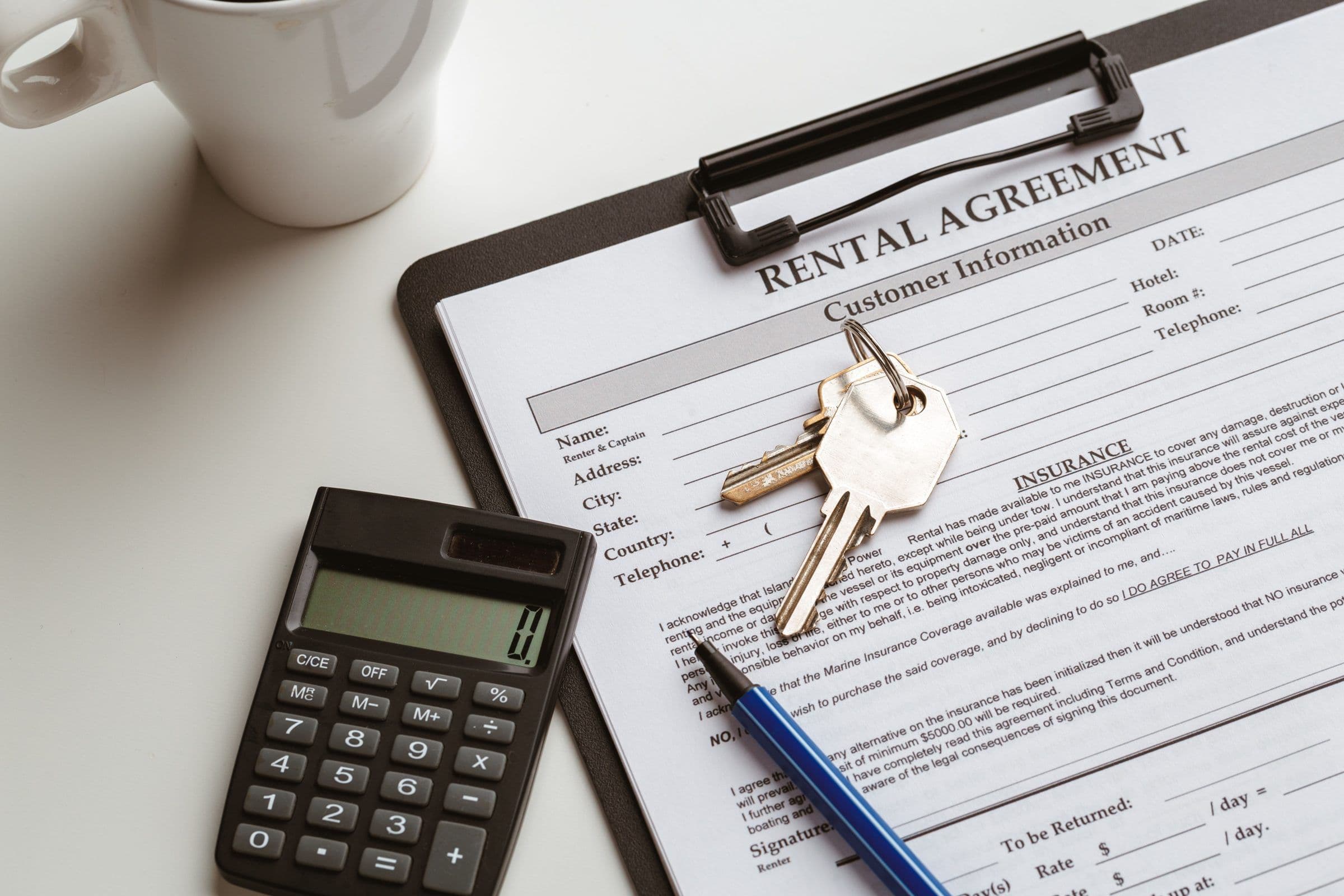
If a landlord-tenant problem in Dubai can't be solved by agreement, it goes to the Rental Disputes Center (RDC). The RDC is the judicial arm of Dubai Land Department (DLD) and was set up by Decree No. 26 of 2013. You register a case online at rdc.gov.ae or at a Real Estate Services Trustee centre. For most rent-based cases the filing fee is 3.5% of the annual rent, with a minimum of AED 500 and a maximum of AED 20,000. The case can be settled through conciliation or decided by a tribunal, and the decision is then enforced by the RDC itself.
This guide covers what the RDC handles, what to prepare before you file, the official fee schedule, and how hearings, appeals and enforcement work. Fees and procedures are taken from the RDC's own service pages and the Dubai legislation portal, as published in October 2026.
What does the Rental Disputes Center handle?
Under Article 6 of Decree No. 26 of 2013, the RDC has exclusive jurisdiction over rent disputes between landlords and tenants of property in Dubai, including free zones. This covers counterclaims and urgent or interim applications. The RDC also hears appeals against its own judgments and enforces its decisions.
Typical cases include:
- Unpaid rent and bounced rent cheques
- Eviction during the lease or at the end of it
- Lease renewal and rent increase disagreements
- Security deposit refunds and other money claims
- Maintenance and other breaches of the tenancy contract
The decree lists three types of dispute that the RDC does not hear:
- Disputes in free zones that have their own tribunals or courts for rent disputes
- Disputes arising from a lease finance contract
- Disputes over long-term leases covered by Law No. 7 of 2006
Before you file: get the basics in order
Most RDC cases are won or lost on paperwork. Check these points before you register a case.
Make sure the lease is registered in Ejari
The RDC asks for a copy of the latest lease (Ejari) with every rental case. If the contract was never registered, sort that out first. Our Ejari registration guide explains the steps.
Serve the right notice, in the right way
Many disputes depend on whether a notice was served correctly. Under Law No. 26 of 2007, as amended by Law No. 33 of 2008:
- To change the lease terms at renewal (including the rent), either party must notify the other at least 90 days before the contract expires, unless the contract says otherwise (Article 14).
- For unpaid rent, a landlord can seek eviction if the tenant fails to pay within 30 days of being served a notice requesting payment, unless the parties agreed otherwise (Article 25(1)(a)).
- For eviction at the end of the lease, the landlord must give at least 12 months' notice of the reason (Article 25(2)).
Eviction notices must be served through a Notary Public or by registered mail. An email or WhatsApp message alone is not enough. For eviction claims, the RDC asks for the notarised notice with the notification officer's report, or the registered post receipt.
Try to settle first
A settlement is usually faster and cheaper than a judgment. Under Article 10 of the decree, the RDC's Mediation and Conciliation Directorate can settle most rent disputes amicably. Urgent and interim applications are the exception. If you settle through the RDC's conciliation service, the agreement is signed by both parties and the conciliator, and a supervising judge approves it. It can then be enforced at the RDC. The RDC also refunds half of the court fee paid for basic claims when a settlement is reached.
Documents required to file a case at the RDC
The RDC lists the same core documents for an amicable settlement case and for a First Instance rental lawsuit:
| Document | Notes |
|---|---|
| Copy of the latest lease (Ejari) | Required for rental cases |
| Emirates ID | Companies: trade licence and the manager's or owner's ID |
| Bank letter or statement showing your IBAN | For the claimant |
| Notarised notice with the notification officer's report, or registered post receipt | Eviction claims only |
| Supporting documents | For example a power of attorney, management contract, correspondence, notices, DEWA bills, cheques and letters |
Every document must be in Arabic or legally translated into Arabic. Documents are uploaded to the RDC system. The RDC states that hard copies are not accepted.
RDC fees: the official schedule
These fees come from the RDC's service pages for registering a case:
| Fee | Amount |
|---|---|
| Rent-based cases: eviction, lease renewal, rent claim, terminating a lease in force, returning to premises after demolition and reconstruction | 3.5% of the annual rent (or the lease value if the term is more or less than a year). Minimum AED 500, maximum AED 20,000 |
| Monetary claims | 3.5% of the claimed amount. Minimum AED 500, maximum AED 15,000 |
| Process service | AED 100 |
| Knowledge fee | AED 10 |
| Innovation fee | AED 10 |
| Registering a power of attorney (if applicable) | AED 25 |
| Filing through a Real Estate Services Trustee centre | AED 130 + VAT added |
Worked examples
- Unpaid rent on an AED 90,000 lease: 3.5% × AED 90,000 = AED 3,150. Add AED 100 for process service and AED 20 for the knowledge and innovation fees, and the total is AED 3,270 when filed online without a power of attorney.
- A tenant claiming back a AED 5,000 deposit: 3.5% × AED 5,000 = AED 175. That is below the minimum, so the filing fee is AED 500, plus the same AED 120 in other fees.
Fees can change, so confirm the amount shown in the RDC system before you pay.
How to file a case: online or through a trustee centre
The RDC offers two channels.
Online at rdc.gov.ae:
- Create an account (if you don't have one), sign in and choose the service.
- Enter the case details and upload your documents.
- Pay the fee once the case has been checked.
- Attend the session through the RDC's remote (tele-litigation) system.
- Receive the conciliation agreement or judgment through the website.
At a Real Estate Services Trustee centre: staff check your documents, enter the case and take payment. The AED 130 + VAT partner fee applies. Hearings are still held remotely.
The RDC accepts payment through Noqodi, by debit or credit card, or in cash at a service centre. It lists registration as taking one business day.
Hearings, judgment and appeal timelines
- Judgment: under Article 16 of the decree, tribunals must decide a claim within 30 days of the file being referred to them. The period can be extended once by the same length.
- Who can appeal: First Instance judgments in claims worth less than AED 100,000 are final (Article 17). There are listed exceptions, and the most important one for landlords and tenants is that eviction judgments can be appealed whatever the claim value.
- Appeal deadline: 15 days. It runs from the day after the judgment is issued if you attended, or from the date you were notified if you didn't.
- Appeal security: if the judgment includes a money award, the appellant deposits half of the amount awarded. The deposit is refundable.
- Appeal judgments are final. The Appellate Division's decisions cannot be appealed further (Article 14).
Enforcing an RDC judgment
A judgment only helps if it is enforced. The RDC's Judgment Enforcement Directorate handles this for all case types, including eviction, money claims and lease renewals. You open an execution file with the judgment carrying the enforcement stamp.
For eviction, the execution fee is 1% of the annual rent, capped at AED 5,000. The usual AED 100 process service and AED 20 in other fees also apply. Each additional electronic request during execution costs AED 20.
Common landlord cases
- Unpaid rent or bounced cheques: serve a payment notice through a Notary Public or by registered mail. If the rent is still unpaid after 30 days, file for payment and eviction.
- Eviction at the end of the lease: this is only allowed on the grounds in Article 25(2). They are demolition and reconstruction with permits, comprehensive restoration that needs the unit empty (confirmed by a Dubai Municipality report), moving in yourself or a first-degree relative (if you own no suitable alternative property), or selling the property. In every case you must give 12 months' notice. If you take a property back for your own use, you cannot lease it to someone else for two years (residential) or three years (non-residential) without risking a compensation claim (Article 26). For a sale, see our guide to selling a tenanted property in Dubai.
- Breach of other lease terms: subletting without written consent, serious damage, illegal use or misuse can justify eviction during the lease. For a general breach of the law or the lease terms (Article 25(1)(h)), the tenant must first be served a notice and given 30 days to comply.
Common tenant cases
- Rent increases: a change to the rent at renewal must be notified at least 90 days before the lease expires (unless the contract says otherwise). Check whether the increase is allowed under DLD's rental index with our guide to the RERA rent calculator before you agree or file.
- Security deposit not returned: this is a monetary claim, so the fee is 3.5% of the amount with the AED 500 minimum.
- Maintenance not carried out: keep dated requests and photos. Our guide to who pays for property maintenance in Dubai explains which side is responsible for what.
- Renewal disputes: see tenancy contract renewal in Dubai for the notice periods and renewal steps.
How to avoid ending up at the RDC
- Register every lease in Ejari and keep the signed contract.
- Put agreements about rent, cheques, maintenance and deposits in writing.
- Use a Notary Public or registered mail for any notice that may matter later.
- Keep proof of payments and of the unit's condition at move-in and move-out.
- Before signing, both sides can use the RDC's Rental Good Conduct Certificate service, which shows the other party's rental case history in the RDC system.
Read our guide to signing a tenancy contract in Dubai before you sign. Landlords who prefer not to handle notices, renewals and rent collection themselves can see what our landlord services cover.
This article is general information, not legal advice. For a specific dispute, check the current requirements with the Rental Disputes Center or a qualified UAE lawyer.
Sources: RDC – Register Dispute Lawsuit (Amicable Settlement), RDC – Register First Instance Lawsuit (Rental), RDC – Register an Appeal (Rental), RDC – Register an Execution Proceeding (Rental), Decree No. 26 of 2013, Law No. 33 of 2008.