Why High-Net-Worth Individuals Are Buying Property in Dubai
Dubai has always attracted wealth. But in 2026, the pace at which high-net-worth individuals (HNWIs) are acquiring property here has reached a level that is impossible to ignore. From European billionaires to Asian family offices to Middle Eastern dynasties repositioning capital amid the Iran-Israel-USA conflict, Dubai is the address of choice for the world's most discerning investors.
This is not a trend driven by hype. It is driven by hard financial logic, political intelligence, and a lifestyle offer that no other city in the world currently matches. Here is exactly what is pulling wealth into Dubai property right now.
1. Zero Tax - The Most Powerful Number in Wealth Management
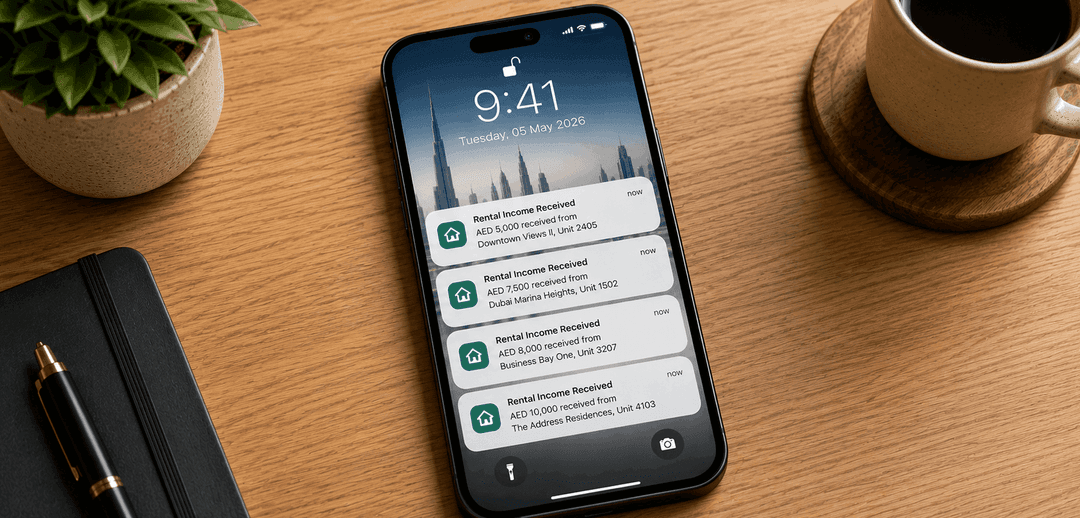
For high-net-worth individuals, tax efficiency is not a preference it is a strategy. Dubai offers something that London, New York, Singapore, and Hong Kong simply cannot: zero personal income tax, zero capital gains tax, and zero inheritance tax on property assets.
When you are managing significant wealth, the compounding effect of keeping 100% of your rental income and 100% of your capital gains is transformative. Over a 10-year investment horizon, this alone can represent millions of dirhams in preserved wealth that would otherwise be lost to taxation in other jurisdictions.
2. The Golden Visa - A Residency Backed by Real Asset Value
The UAE Golden Visa has fundamentally changed the calculus for HNWIs evaluating Dubai property. A property investment of AED 2 million or above qualifies the investor and their immediate family for a 10-year renewable residency visa with no local sponsor required.
For wealthy individuals navigating geopolitical uncertainty, particularly those affected by the Iran-Israel-USA tensions in the broader region, the ability to secure a legally sound, internationally recognised residency through a tangible asset is an extraordinarily compelling proposition. Dubai becomes not just an investment, it becomes an anchor.
3. Political Stability in an Unstable Region
The UAE's deliberate policy of political neutrality has made it the only truly safe address in the Middle East for wealth preservation in 2026. While tensions between Iran, Israel, and the United States have created significant uncertainty across the region, Dubai has remained completely insulated its financial systems intact, its property market active, and its government stable.
For HNWIs who have watched wealth evaporate in conflict-affected markets before, Dubai's neutrality is not a minor benefit. It is the deciding factor. The UAE maintains diplomatic and trade relationships across all sides of the conflict, making it uniquely positioned to remain open and operational regardless of how regional events unfold.
4. Returns That Match and Often Exceed Global Luxury Markets
Dubai's luxury property market does not ask investors to sacrifice returns for lifestyle. In fact, it delivers both simultaneously. Prime residential communities in Dubai are generating:
- Gross rental yields of 5% to 8% on ultra-luxury assets - well above the 2% to 3% typical in London, Paris, or New York prime markets
- Consistent capital appreciation in landmark addresses such as Palm Jumeirah, Downtown Dubai, Emirates Hills, and Dubai Hills Estate
- Strong short-term rental premiums in luxury units, driven by Dubai's year-round tourism demand and growing MICE (Meetings, Incentives, Conferences, Exhibitions) economy
- Currency stability via the dirham-dollar peg, eliminating foreign exchange erosion on returns
- Securing a premium asset is only the first step; maximizing long-term yields requires working with elite Dubai property management teams who specialize in hands-off portfolio growth.
5. A Lifestyle Product That Stands Alone Globally
Wealth follows quality of life and Dubai's lifestyle offering for HNWIs in 2026 is genuinely without peer. The city combines the privacy and security of a gated luxury community with the cultural richness, dining, retail, and entertainment infrastructure of a world-class metropolis.
Specific lifestyle drivers attracting HNWIs include:
- Ultra-luxury residential developments on Palm Jumeirah, Bluewaters Island, and the new Palm Jebel Ali - offering private beach access, yacht berths, and full concierge services
- World-class international schools and universities, making Dubai a genuine long-term family base rather than just a financial address
- A strategic time zone that allows HNWIs to do business across Asia, Europe, and the Americas within a single working day
- One of the lowest crime rates of any major global city, with a security infrastructure befitting a world-leading financial hub
- A growing arts, culture, and gastronomy scene that has firmly positioned Dubai alongside London, Paris, and New York as a truly global city
6. Supply of Trophy Assets Is Limited and Demand Is Rising
Ultra-prime property in Dubai is finite. The number of beachfront plots on Palm Jumeirah, penthouses with full Burj Khalifa views, and branded residences from the world's top hotel groups is limited by design and geography. Yet the pool of HNWIs globally continues to grow and an increasing proportion are looking at Dubai as their primary or secondary residence.
This supply-demand dynamic is creating exactly the conditions that sophisticated investors look for: scarcity of premium product, rising demand from an expanding buyer base, and a pipeline of world-class development that continues to elevate the city's global standing. For HNWIs who move early, the opportunity to acquire trophy assets before the next wave of appreciation is a narrow one.
FAQs
1. What type of property do HNWIs typically buy in Dubai?
High-net-worth individuals in Dubai typically target branded residences, ultra-luxury penthouses, Palm Jumeirah villas, and waterfront apartments in Downtown Dubai or Dubai Marina. Many also invest in off-plan flagship developments from internationally recognised developers as early-stage capital appreciation plays.
2. Is Dubai property a good long-term hold for HNWIs?
Yes. Dubai's combination of zero capital gains tax, strong rental yields, Golden Visa residency rights, and a continuously developing infrastructure pipeline make it one of the strongest long-term holds in global luxury real estate. HNWIs who entered the market five to ten years ago have seen significant capital appreciation alongside consistent income.
3. How does the Iran-Israel-USA conflict affect HNWI investment decisions in Dubai?
For many HNWIs particularly those with existing exposure to conflict-affected markets the regional tensions have accelerated rather than delayed their decision to invest in Dubai. The UAE's political neutrality and operational stability make it the natural safe haven for capital repositioning within the Middle East and beyond.
4. Do HNWIs need to be resident in Dubai to own property there?
No. Foreign nationals can purchase freehold property in designated areas of Dubai with full ownership rights and no residency requirement. However, many HNWIs choose to obtain the Golden Visa alongside their purchase, giving them the option of residency without any obligation to live in Dubai full-time.
Bottom Line
The movement of high-net-worth capital into Dubai property in 2026 is not a coincidence or a moment of market exuberance. It is the rational conclusion of a clear-eyed analysis: zero taxation, Golden Visa security, political neutrality amid regional conflict, world-beating returns, and a lifestyle product that has no genuine global rival.
For HNWIs evaluating where to place long-term wealth, Dubai is no longer just one option among many. For a growing number of the world's most sophisticated investors, it is the only answer that makes complete sense. Click here to chat directly with our Seven Century Property Management desk on WhatsApp to learn how we protect your Dubai real estate assets while you are overseas.